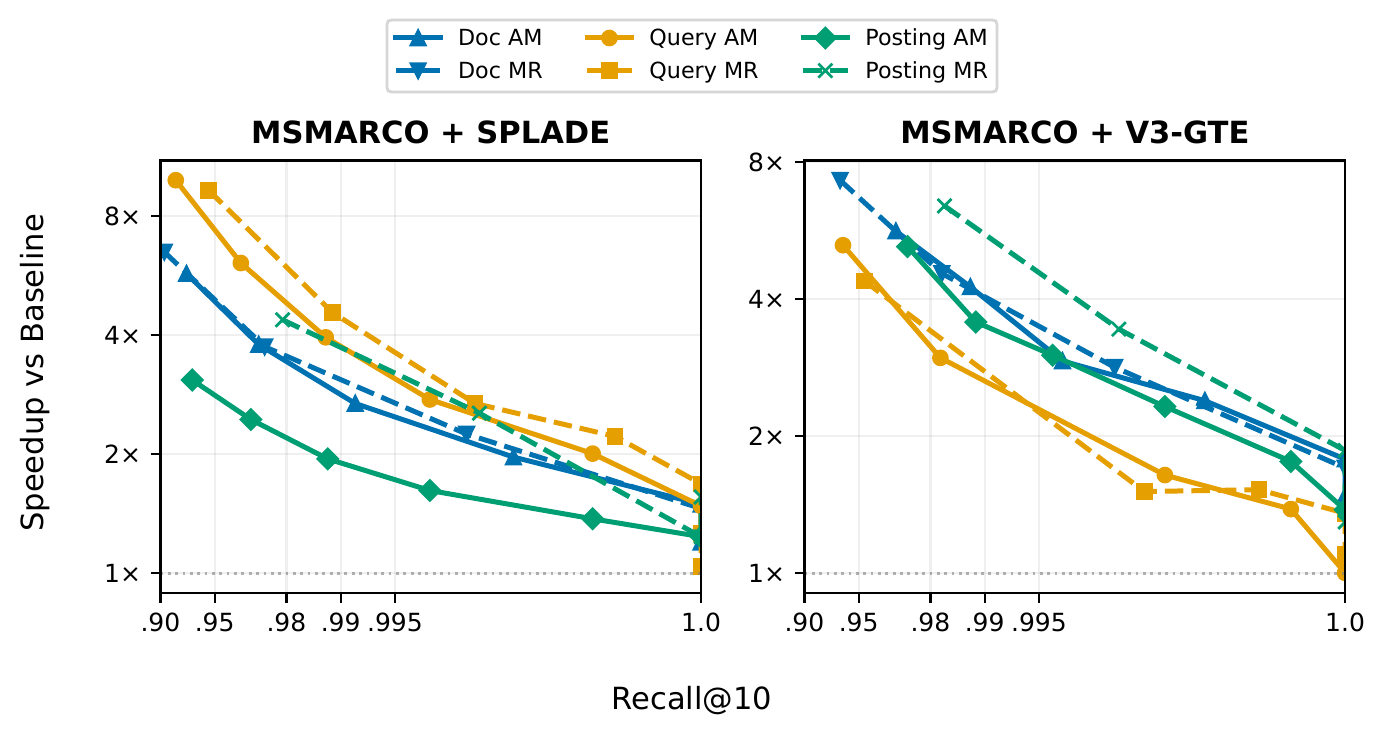
Static pruning is widely used to accelerate sparse neural retrieval, yet existing studies each validate their conclusions within a single custom pipeline, leaving it unclear which findings transfer to modern engines with different index organizations and dynamic pruning mechanisms. We present the first cross-engine pruning portability study, evaluating static pruning strategies across three engines – a controlled C++ pipeline (exhaustive inverted index), BMP (block-max pruning), and SEISMIC (clustered inverted indexes) – on two benchmarks (MS MARCO, Natural Questions) with two encoders spanning opposite query-density regimes (SPLADE: 44 avg. query terms; V3-GTE: 7 avg. query terms), totaling 1,140 experimental configurations, with an additional deep-judgment validation on TREC DL 2019/2020. We find that index-side pruning (document and posting-list) is portable: it consistently reduces latency (1.2–6.6x) and index size (18–82%) across all engines because sparse retrieval is memory-bound – a conclusion we support with cache-miss, TLB, and IPC profiling. In contrast, query pruning is already internalized by modern engines: it yields 4–11x speedup on the exhaustive pipeline but is subsumed by BMP’s beta and SEISMIC’s query_cut. Static pruning complements dynamic pruning: on BMP, combining document and query reduction yields 2.5x speedup with NDCG@10 within 0.003 of the exact baseline. Finally, NDCG@10 saturates while Recall@10 is still in the 85–95% range across all three engines, providing a portable stopping criterion: practitioners can push pruning to this knee without visible ranking degradation. Together, these findings answer what transfers (index-side pruning), what breaks (query pruning), and what still helps (static atop dynamic pruning).
@inproceedings{song2026pruning,title={Static Pruning Across Sparse Retrieval Regimes: What Transfers, What Breaks, and What Still Helps},author={Song, Zirui and Zhu, Yuye and Yang, Yang},booktitle={Proceedings of the 35th ACM International Conference on Information and Knowledge Management (CIKM)},year={2026},publisher={ACM},}
2024
IEEE RCAR
A Dynamical System Approach to Robotic Ultrasound Imaging: Towards Intrinsically Stable Robotic Sonography
Wanli Liuchen, Anqing Duan, Zirui Song, Maria Victorova, and David Navarro-Alarcon
In 2024 IEEE International Conference on Real-time Computing and Robotics (RCAR), 2024
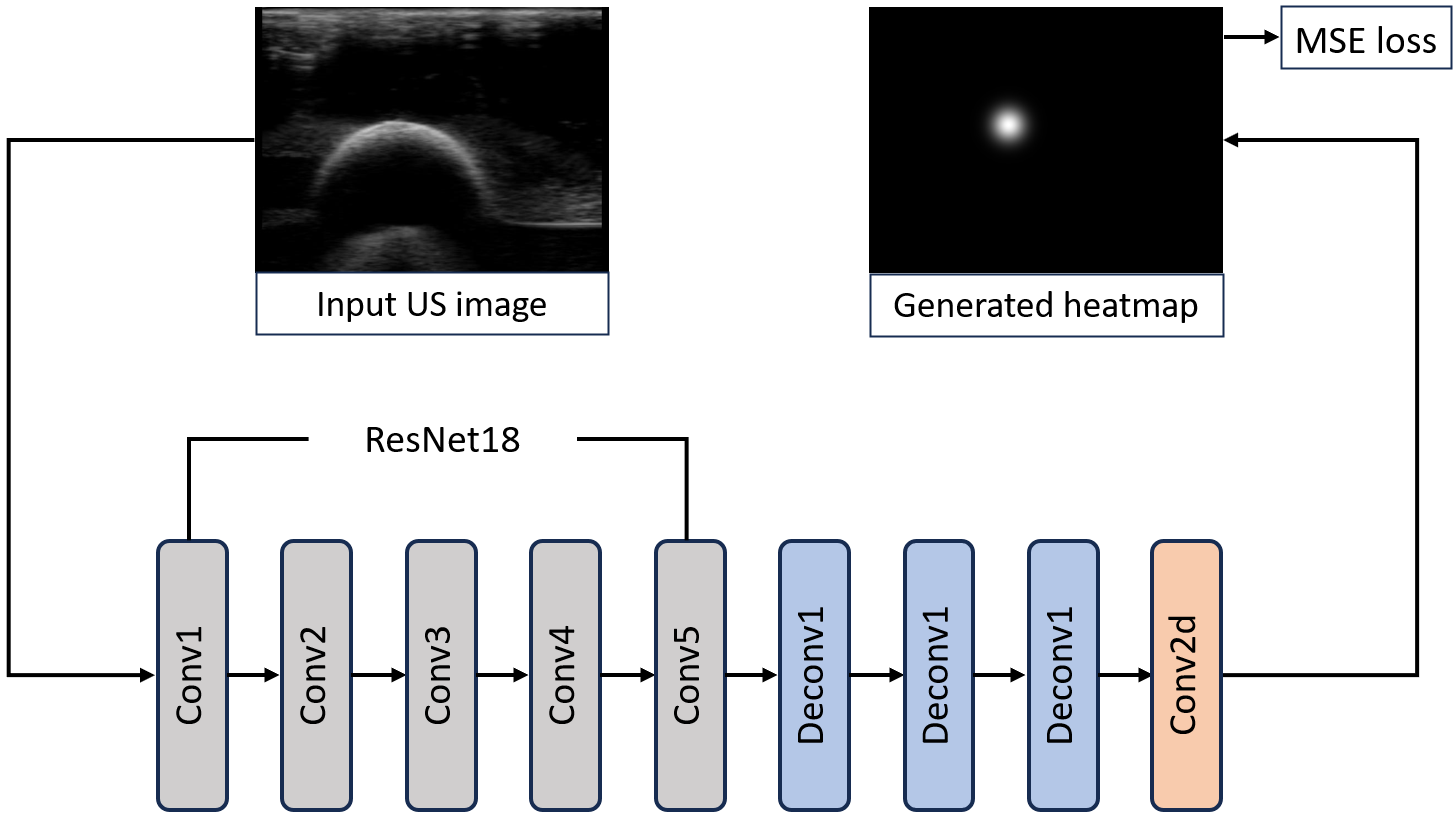
We present a framework combining ResNet deep learning with time-invariant dynamical systems to enhance robotic ultrasound-guided scanning. Our approach enables robots to fulfill multiple objectives concurrently – sustaining uniform contact pressure and achieving exact positioning – while preemptively adjusting dynamics to maintain stable patient interaction. Experimental validation on a UR5 robotic arm demonstrates stable scanning with force tracking RMSE as low as 2.54N, and the deep learning model achieves 80% accuracy in organ detection.
@inproceedings{liuchen2024dynamical,title={A Dynamical System Approach to Robotic Ultrasound Imaging: Towards Intrinsically Stable Robotic Sonography},author={Liuchen, Wanli and Duan, Anqing and Song, Zirui and Victorova, Maria and Navarro-Alarcon, David},booktitle={2024 IEEE International Conference on Real-time Computing and Robotics (RCAR)},pages={647--652},year={2024},publisher={IEEE},}